
How Cape Space Properties Ranks in the Top 3 Across Multiple Cape Town Suburbs
Commercial property sites compete for one keyword per suburb and lose the fight through thin, repeated listing pages. Cape Space Properties took a different approach. The site now holds top 3 or top 4 organic positions across five separate Cape Town suburbs, its individual building pages rank on their own for specific searches, and Google’s AI Overviews cite the site directly when answering questions about rental rates and available space. Here is how that happened, and why the method behind it matters more than the rankings themselves.
Ranking Across Numerous Suburbs at Once
Commercial property searches are almost always suburb specific. A tenant looking for office space in Claremont searches differently from one looking in Century City, even when the underlying need is the same. Cape Space Properties built separate, fully developed content for each area rather than one generic commercial property page with suburb names inserted into it. The current organic positions are as follows.
| Suburb | Organic ranking position |
|---|---|
| Cape Town CBD | 2 |
| Century City | 3 |
| Tygervalley | 3 |
| Claremont | 4 |
| Woodstock | 4 |
Positions like these are difficult to hold against national listing platforms with far larger domains, unless the local content answers the search more precisely than a national platform can. This is the pattern behind every result in this case study: specific content built for the person searching, which then performs well for the search engine as a result, not the other way around.
Find out more about our Commercial Real Estate Marketing Services
Ranking Across Numerous Suburbs at Once
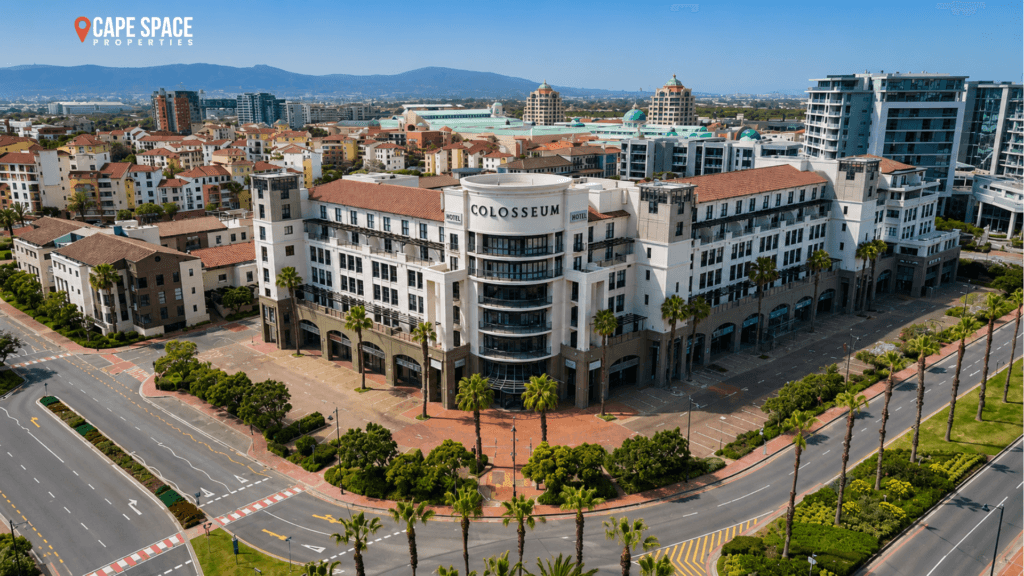
Cape Space Properties builds one page per building rather than folding every property into a single suburb listing page. Portside Building at 5 Buitengracht Street is a clear example. A search for “office to rent portside building” places the Cape Space Properties page first organically, ahead of a paid listing from a competing platform.
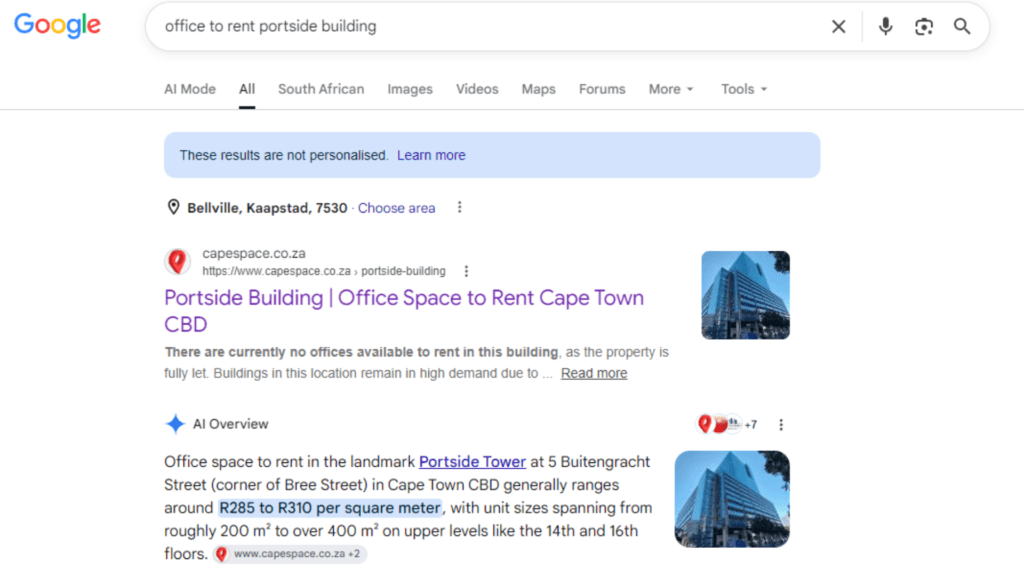
The page holds this position because it answers the exact question a searcher has about that specific building, current availability, unit sizes, and rental range, rather than asking the reader to filter through a general listings page to find it.
Cited Directly in Google AI Overviews
Two examples confirm that this same content structure earns citations in Google’s AI Overviews, not just standard organic rankings.
Portside Tower rental rate
For the search “office to rent portside building,” Google’s AI Overview states that rental rates generally range from R285 to R310 per square metre, with unit sizes from roughly 200 to over 400 square metres on upper floors. The citation tag attached to that figure reads www.capespace.co.za.
Winelands Close warehouse specifications
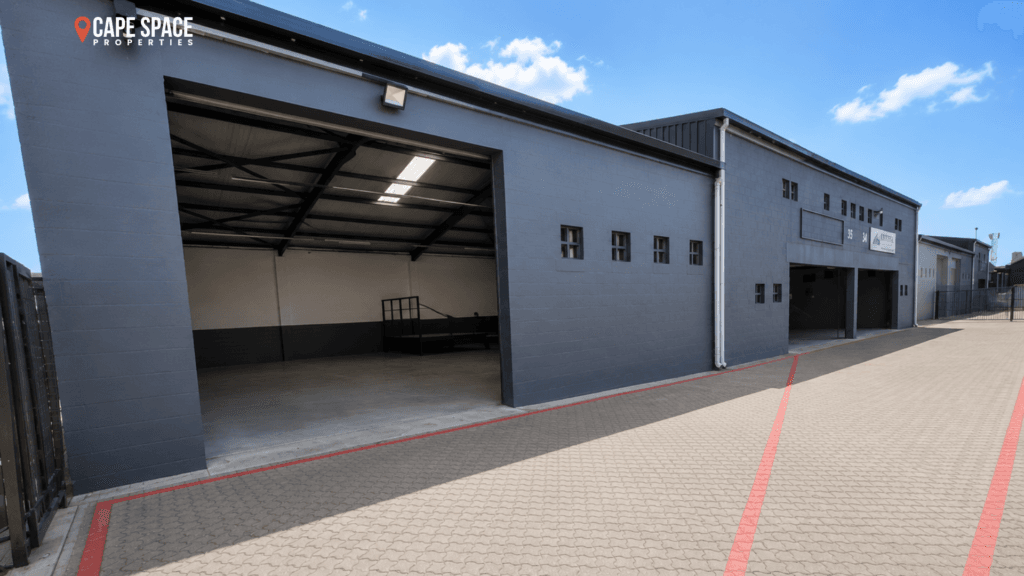
For the search “warehouse to rent winelands close,” Google’s AI Overview describes Winelands Close Business Park in Stikland Industrial, including unit sizes from 376 to 1,130 square metres and rental rates averaging R55 to R130 per square metre. The citation tag again credits www.capespace.co.za, alongside three other sources.
The Method Behind the Numbers
None of these results came from technical SEO work alone. They came from a content structure built around one rule: each page answers one specific question completely, for the person asking it, before it does anything for a search engine. A suburb page answers what it costs and what is available in that suburb. A building page answers what that exact building offers right now. That structure happens to be exactly what search engines and AI answer engines need to identify a page as the correct source, but the content works because it genuinely helps the reader first.
Frequently Asked Questions
Why do individual building pages rank better than one combined listings page?
A building page can answer a specific search completely, including exact rental rates, unit sizes, and availability for that address. A combined listings page has to generalise across many properties, which makes it harder to match a specific search and less likely to be cited as a direct answer.
Does ranking in Google’s AI Overviews require different content from standard SEO content?
No. The same detailed, specific content that earns a strong organic ranking is what Google’s AI Overview draws from to generate a cited answer. The difference is in how completely and precisely the page answers one question, not in a separate optimisation process.
Can this approach work outside commercial property?
Yes. Any business with multiple locations, products, or service areas can apply the same structure, one page per specific offering, built to answer the exact question a person searching for it would ask.