

What Can I Do to Improve My SEO? Practical Advice From Real Client Projects
By Lindi Hellyer | Founder & Lead SEO Specialist, Web Space Design Cape Town
If you have a business website, you have probably asked yourself the question: “What can I do to improve my SEO?” You may already have invested in a professional website, written a few blog posts and added keywords to your pages. Yet your competitors continue to appear above you in Google search results. At Webspace Design, this is a problem we regularly encounter when working with South African businesses. Some clients have established websites that have never performed particularly well in search. Others have strong brands and years of industry experience, but their websites do not communicate that expertise effectively to search engines.
The good news is that improving SEO does not always require rebuilding your entire website. Often, the greatest opportunities involve improving your existing content, correcting technical problems and organising your website around what potential customers are actually searching for. I want to share some of the steps we take to improve website SEO, using examples from businesses we have worked with.

Start With an SEO Audit Before Changing Anything
One of the biggest mistakes businesses make is changing their website without first establishing why it is underperforming. Before recommending improvements, I want to know how Google currently sees the website, which pages attract visitors, which keywords generate impressions and where the opportunities for growth exist. We use tools such as Google Search Console and Google Analytics to assess existing performance. We also review the website’s technical health, content structure and competing websites.
An effective SEO audit should answer several questions:
- Which pages currently receive organic traffic?
- What keywords does the website rank for?
- Are important pages indexed by Google?
- Are multiple pages competing for the same keywords?
- Are titles, headings and page descriptions properly optimised?
- Are there technical problems affecting performance?
- Which search terms offer realistic opportunities for improvement?
An audit helps us prioritise the changes that are most likely to improve relevant search visibility.
What you can do: Open Google Search Console and review your website’s Performance report. Look for pages receiving a reasonable number of impressions but relatively few clicks. These pages may benefit from improved titles, meta descriptions or content that better addresses the search query.
Create Dedicated Pages for Your Important Services
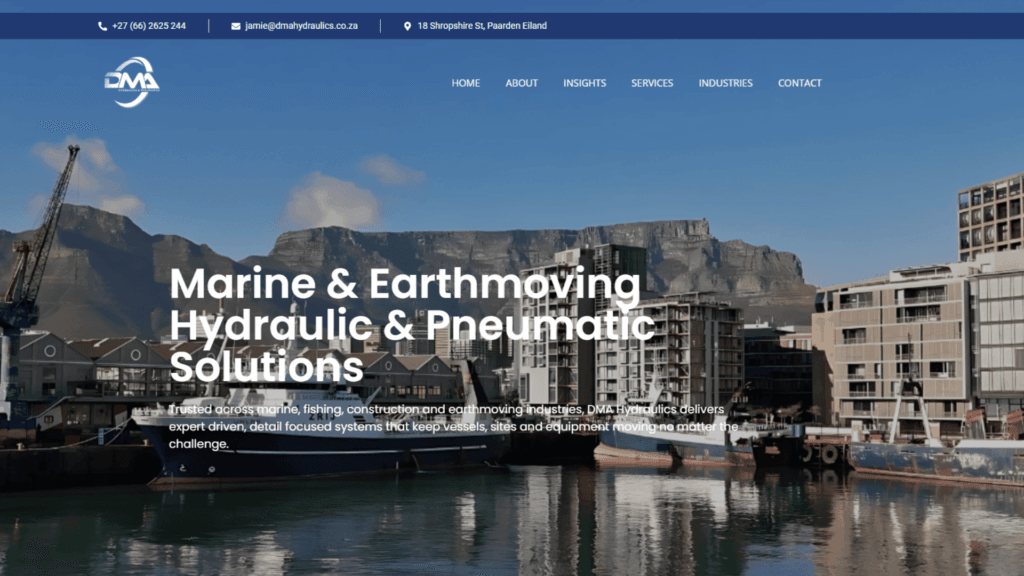
DMA Hydraulics is an established hydraulic engineering business with extensive experience in the marine, industrial and construction sectors. When we started working with DMA Hydraulics, its existing website consisted of a single page that did not adequately represent the range of services the company provides. From an SEO perspective, this created a limitation.
A single page cannot always provide sufficient information to compete for several distinct services, particularly in a specialist technical industry. We restructured the website to include dedicated service pages, improved navigation and a blog where the company could publish industry-related content. This created opportunities to optimise individual pages for more specific searches, rather than expecting one general page to rank for everything. For example, customers researching hydraulic repairs may have different requirements from those searching for marine hydraulic services. Each audience needs relevant information.
Optimise Your Website for the Locations You Serve
Client example: Cape Space Properties
Local SEO is particularly important for businesses operating in specific cities, suburbs or commercial districts. One of the projects we have featured at Webspace Design is Cape Space Properties, a commercial real estate website focused on office and industrial property in Cape Town. Commercial property searches are highly location-specific. Someone searching for office space in Cape Town CBD is not necessarily interested in available offices in Century City, Claremont or Tyger Valley. These are distinct markets with different buildings, rental levels and business requirements.
A general website page covering every location makes it difficult to compete for all these searches effectively. Our approach has focused on developing a clear structure around relevant property types and geographic locations, supported by detailed property information and area-specific content. An important consideration is ensuring that general location pages and individual building pages serve different purposes. This reduces unnecessary competition between pages on the same website. We also use internal links to connect relevant listings, area information and property-related resources.
Why this approach matters
Google needs to identify which page is most relevant to a particular search. For example, a page focused on office space in Cape Town CBD should provide information specifically about that market, rather than repeating generic descriptions that could apply to any commercial district. Relevant location content helps users compare options and gives search engines clearer information about the geographic focus of the page.
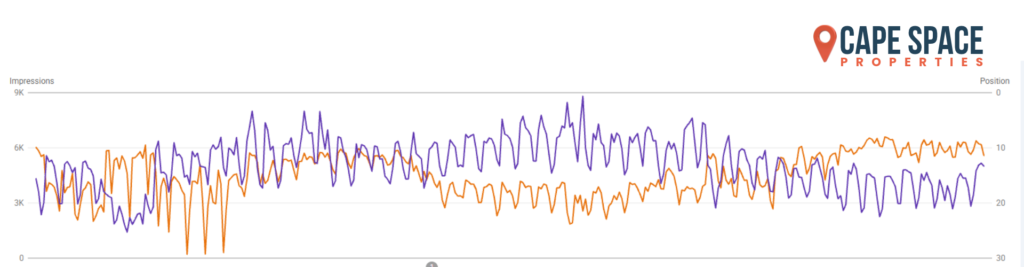
Client SEO results
- 28% Improvement in Average position. (28 to 7)
- 45% Improvement is location page position over 3 months
- Average website visits increased to over 250 new visitors per day over 6 months
Source: Google Search Console
Make Your Website Content Reflect Your Expertise
Client example: Shapiro & Haasbroek Inc.
For professional service businesses, building confidence is an important part of converting website visitors into enquiries. This is particularly relevant in industries such as legal services, financial services and specialist consulting.
When we worked with Shapiro & Haasbroek Inc., an established family law practice, the objective was to modernise the firm’s website and improve how its expertise was presented online. We introduced a clearer website structure, improved the presentation of legal practice areas and implemented on-page SEO improvements. Our SEO work included keyword alignment, metadata optimisation, technical improvements and internal linking. We also focused on making it easier for visitors to locate relevant legal services and contact the firm.
Why professional expertise matters for SEO
Google’s search systems aim to surface content that is useful and reliable. For professional service websites, demonstrating relevant experience and expertise is particularly important. This does not mean adding qualifications or claims simply to impress search engines. It means providing accurate information about the people behind the business, their experience, the services they provide and the questions their clients commonly ask. For a law firm, this might involve explaining different legal processes through dedicated service pages and informative articles. For an engineering business, it may involve detailed explanations of technical capabilities, applications and completed projects.
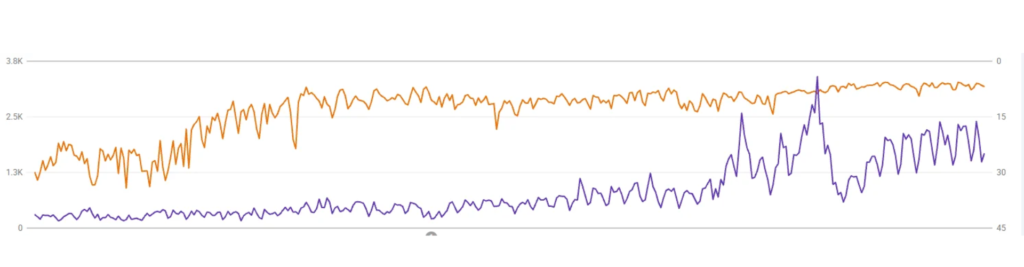
Results
- Average impressions increased from below 200 to over 2,000 per day
- Average position improved from 32 to 6 on Google Searches
- Average website visits went from 4-5 per day to over 40 per day in just 6 months.
Source: Google Search Console
Improve Your Existing Content Before Publishing More
Publishing blog posts regularly can support SEO, but producing more content is not always the answer. I often find that businesses already have pages with potential. The problem is that those pages do not adequately answer the questions people are asking. We review existing content to identify opportunities to improve relevance, accuracy and usefulness.
See our content creation service
This may involve expanding a service description, updating outdated information, adding practical examples or answering questions that frequently appear in search results. We also look for pages covering substantially similar topics. If several pages compete for the same keyword without serving distinct purposes, it may be more effective to consolidate or differentiate them.
What you can do: Identify five important pages on your website and compare them with the pages currently ranking on Google. Ask whether your content provides information that is genuinely useful and whether it answers the main questions your customers are likely to have.

Improve Your Website's Technical SEO
Technical SEO makes it easier for search engines to access, interpret and index your website. Even well-written content can struggle if important pages are blocked from indexing or the website has significant technical problems.
Some of the areas we review include:
- Mobile usability and responsive page layouts
- Page loading performance and Core Web Vitals
- Internal linking and site navigation
- XML sitemaps and indexing settings
- Canonical URLs and duplicate content
- Broken links and unnecessary redirects
- Image sizes and appropriate file formats
- Structured data where relevant
For WordPress websites, unnecessary plugins, large image files and poorly configured optimisation tools can create avoidable performance problems. However, improving a website’s speed score alone does not guarantee better Google rankings. Technical improvements need to support the wider content and search strategy.
What you can do: Test your main pages using Google PageSpeed Insights and review the indexing reports in Google Search Console. Prioritise problems that affect important pages or prevent search engines and visitors from using your website properly.
Use Internal Links to Strengthen Your Website Structure
Internal linking is one of the most useful SEO improvements a business can make without requiring a large budget. A link from one relevant page to another helps visitors find more information and helps search engines discover how different pages relate to each other. For example, an article about improving website SEO should link naturally to a page explaining your SEO services. An article about local search optimisation could link to a relevant service page or a case study demonstrating work completed for a client.
The important point is relevance. Adding links indiscriminately to every page does not automatically improve SEO.
What you can do: Review your most valuable service pages and make sure they are linked from appropriate navigation sections, supporting articles and related pages.
Treat SEO as an Ongoing Business Activity
One of the most important things I explain to clients is that SEO is not a once-off exercise. Google’s search results change, competitors improve their websites and the questions customers ask develop over time. A website that performs well today still requires attention.
This does not mean making changes every week simply for the sake of activity. It means monitoring performance, updating content when necessary, correcting technical problems and responding to new search opportunities. For some businesses, the most valuable SEO improvement may involve creating a new service page. For others, it may involve restructuring existing pages, improving content or solving an indexing problem. The correct approach depends on the website’s starting point and the competition within its market.
How Long Does It Take to Improve SEO?
There is no fixed timeframe for improving Google rankings. Some technical corrections can help Google discover or index pages more effectively relatively quickly. Content and ranking improvements may take several months, particularly in competitive industries.
The age and authority of the website, the quality of competing pages, search demand and the scale of the improvements can all influence the outcome. Rather than promising specific ranking positions, I prefer to establish measurable objectives and review progress against them.
Frequently Asked Questions About Improving SEO
Can I improve my website SEO myself?
Yes. Business owners can make meaningful improvements by updating content, writing clear page titles, improving internal links, checking Google Search Console and ensuring their website provides useful information. More advanced technical SEO and competitive keyword strategies may require specialist assistance.
What is the fastest way to improve SEO?
Start by identifying existing pages that already attract search impressions but receive relatively few clicks or rank just outside the leading results. Improving those pages may offer a more immediate opportunity than publishing entirely new content, although results are not guaranteed.
How often should I update my website for SEO?
Update content when information changes, when search performance suggests improvements are needed or when you can add genuinely useful information. There is no requirement to change every page on a fixed schedule.
Do blog posts help improve SEO?
They can. Blog posts are useful for answering questions, demonstrating expertise and supporting important service pages through internal links. However, the content needs to be relevant to the business and useful to the intended audience.
Why is my competitor ranking higher than my website?
Your competitor may have more relevant content, stronger external links, better-aligned pages, a clearer website structure or a more established search presence. An SEO audit can help identify the differences and prioritise practical improvements.
Is SEO still important with AI search results?
Yes. Search behaviour is changing as Google AI Overviews and other AI-powered search tools become more prominent, but businesses still benefit from accessible websites, useful content, clear service information and credible sources. There is no guaranteed method of securing inclusion in AI-generated answers.
How much does SEO cost in South Africa?
The cost of professional SEO services depends on your website’s size, the competitiveness of your industry and the amount of ongoing optimisation required. At Webspace Design, our monthly SEO packages range from R5,000 to R14,000, depending on your business requirements and SEO objectives. Our services focus on improving your website’s visibility in Google through technical SEO, keyword research, on-page optimisation, content improvements and ongoing performance monitoring. The scope of work depends on the package selected. A smaller business targeting a specific service or geographic area may require a different approach from an established company competing for multiple keywords across several locations.
We recommend starting with an SEO assessment to identify opportunities and determine which package best suits your website, competition and budget.
Contact Webspace Design to discuss an SEO package for your business.
Improve Your SEO With a Clear Strategy
The most effective SEO strategies start with understanding your business, your customers and the search terms that matter. Our work with businesses such as Cape Space Properties, DMA Hydraulics, Shapiro & Haasbroek and Lease IQ demonstrates how different industries require different approaches to website structure, content and search optimisation. What works for a commercial property website may not be appropriate for a law firm or a specialist engineering business.
At Webspace Design, we begin by assessing how your website currently performs, identifying realistic opportunities and developing a practical plan to improve its visibility. If you are wondering what you can do to improve your SEO, the best starting point is finding out what is currently holding your website back.
Find out how we can help improve your website’s search visibility.
Explore our SEO Services or contact Webspace Design to discuss an SEO audit.
Written by Lindi Hellyer, Lead SEO Specialist at Web Space Design, a Cape Town-based website design and digital marketing agency working with businesses across South Africa.